

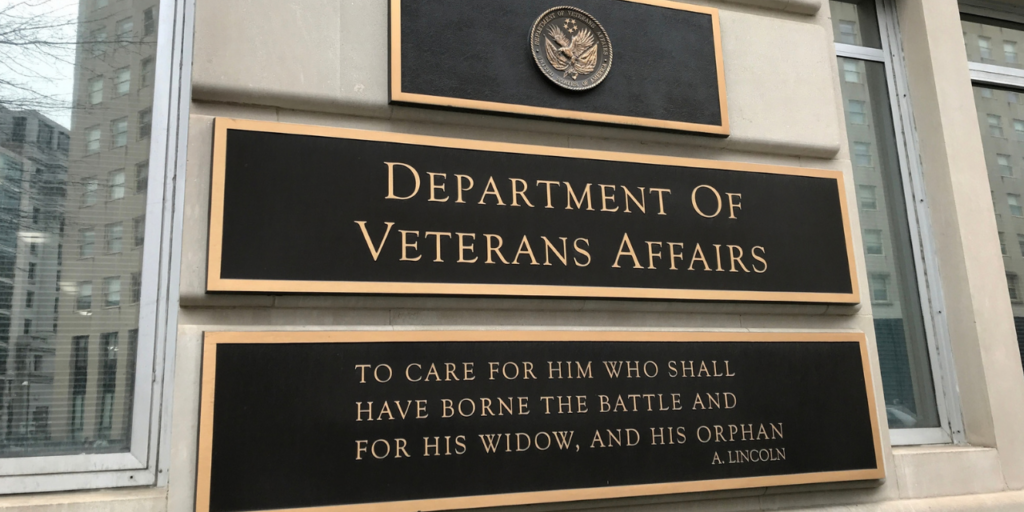
Many chiropractors treating Veterans through the VA Community Care Network (CCN) are encountering a billing issue that can look like a new rule, even though its roots go back years. The immediate billing recommendation is straightforward: when CMT represents active/corrective treatment and the documentation supports that status, append modifier AT. Offices that previously received payment without AT should not assume that past payment means the modifier is optional.
The CCN is VA’s national network for purchasing authorized care from community providers. It is divided into five regions and managed by two third-party administrators: Optum serves Regions 1, 2, and 3, while TriWest serves Regions 4 and 5. By mid-August 2026, Practisync had reviewed multiple VA claim denials that used the following reason code:
Advertisement

RVA50: Modifier AT is required on all chiropractic claims reporting HCPCS 98940, 98941, or 98942.
As of the time of writing this article, this denial had only been observed on claims processed by TriWest, but for reasons noted below, providers are encouraged to include the AT modifier on claims sent to Optum as well. We have not identified a publication announcing a single new 2026 effective date specifically for the chiropractic AT modifier edit. Whether they recently added or tightened an automated claim edit, or began enforcing an existing Medicare-based requirement more consistently, the practical result is the same: CMT claims without AT are now being denied.
What should chiropractic offices do now?
- Use AT when appropriate. Append modifier AT to CPT 98940, 98941, and 98942 when the manipulation represents active/corrective treatment and the record supports that status.
- Do not use AT as a payment workaround. Do not automatically add AT to maintenance care simply to obtain payment. The modifier represents the nature of the treatment and must be supported by the documentation.
- Review recent denials. Look for reason code RVA50 and other missing-modifier denials. Correct and resubmit claims when the underlying service qualifies as active/corrective treatment.
- Support the modifier in the record. Documentation should establish the condition being treated, functional problems, treatment plan, goals, and a reasonable expectation of improvement.
- Keep authorization separate from coding. The VA referral or authorization remains essential. An AT modifier does not replace authorization, and CMS also cautions that the presence of AT does not automatically prove medical necessity. See CMS chiropractic billing guidance.
Both administrators point providers back to Medicare billing rules
TriWest has long told CCN providers that Medicare billing methodology applies when appropriate. Its Provider Handbook states:
“For CCN, TriWest follows Medicare billing guidelines, fee schedules and payment methodology when applicable.”
TriWest VA CCN Provider Handbook: Billing and Claims
That concept is not new for TriWest. A November 2020 Provider Pulse already stated that TriWest, as the administrator for CCN Regions 4 and 5, follows CMS fee-for-service billing guidelines, fee schedules, and payment methodology when applicable. This makes it difficult to describe the 2026 AT denials as the creation of a brand-new billing rule. Historical reference: TriWest November 2020 Provider Pulse
Optum, which administers CCN Regions 1 through 3, uses the same general Medicare-based framework. In a February 2026 provider notice announcing claims-processing changes effective March 10, 2026, Optum gave providers this direct instruction:
“Bill Medicare-priced services according to Medicare rules.”
Optum VA CCN claims-processing update
The current Optum VA CCN Provider Manual goes further, stating that Medicare rates apply to Medicare-priced services regardless of provider type, Medicare enrollment status, place of service, claim type, or patient condition, and that providers must follow CMS billing and coding requirements unless the VA CCN agreement says otherwise.
“All providers are required to follow CMS billing and coding requirements outlined in the Medicare Claims Processing Manual, unless their VA CCN agreement states otherwise.”
Some providers may have always used AT on VA Community Care claims. Others may have submitted the same CMT codes without AT and still received payment. Prior payment does not necessarily prove that the modifier was optional under the administrator’s stated billing rules. It may simply mean the requirement was not being enforced by the same claim edit at that time.
The bottom line
If your office bills VA Community Care for active/corrective CMT, use modifier AT on 98940, 98941, and 98942 when the record supports it. Do not use AT on maintenance treatment simply to get a claim paid.
It is not likely that the VA created a brand-new chiropractic modifier rule in 2026. but rather that it is enforcing previously adopted billing policies. VA Community Care has long incorporated Medicare billing methodology when applicable, Medicare has required AT for active/corrective chiropractic treatment since 2004, and TriWest is now demonstrably enforcing that requirement on CMT claims, and Optum is likely to do the same.
Key references
- VA Community Care Network overview
- TriWest VA CCN Provider Handbook – Billing and Claims
- TriWest November 2020 Provider Pulse
- Optum VA CCN 2026 claims-processing update
- Optum VA CCN Provider Manual
- CMS Medicare Transmittal 23
- CMS chiropractic billing guidance
This material is intended for billing and compliance education and does not replace payer-specific contract terms, current VA CCN guidance, or legal advice. To find out more about Practisync third-party billing services and special pricing available to Illinois Chiropractic Society members, fill out the form here.