Acupuncture Needle and Sharps Container Disposal: What Illinois Chiropractic Offices Must Know
Chiropractic offices that perform acupuncture or other needle-based services, such as blood tests or services offered in multi-disciplinary practices, generate medical waste that falls under both federal and Illinois regulatory oversight. When needles, lancets, or similar sharp instruments are used, even in small volumes, they must be disposed of properly to protect patient safety, staff health, and your clinic’s legal standing.
Acupuncture needles and sharps waste are classified as Potentially Infectious Medical Waste (PIMW) in Illinois, and mishandling them can result in serious fines or citations. OSHA guidelines state, “Contaminated Sharps means any contaminated object that can penetrate the skin.” As a result, chiropractic practices that utilize these needles and sharps are required to handle them appropriately, placing used sharps into an appropriate sharps container.
This article outlines what your office must do once a sharps container is full and how to identify a reputable, cost-effective disposal vendor who meets Illinois EPA and OSHA requirements.
Key Compliance: OSHA, Illinois EPA, and Federal Rules
Under the Occupational Safety and Health Administration (OSHA), any workplace where employees may be exposed to bloodborne pathogens must follow specific safety standards. This includes using puncture-resistant, leak-proof sharps containers placed at the point of use, never allowing overfilling, and documenting safe-handling procedures in an Exposure Control Plan.
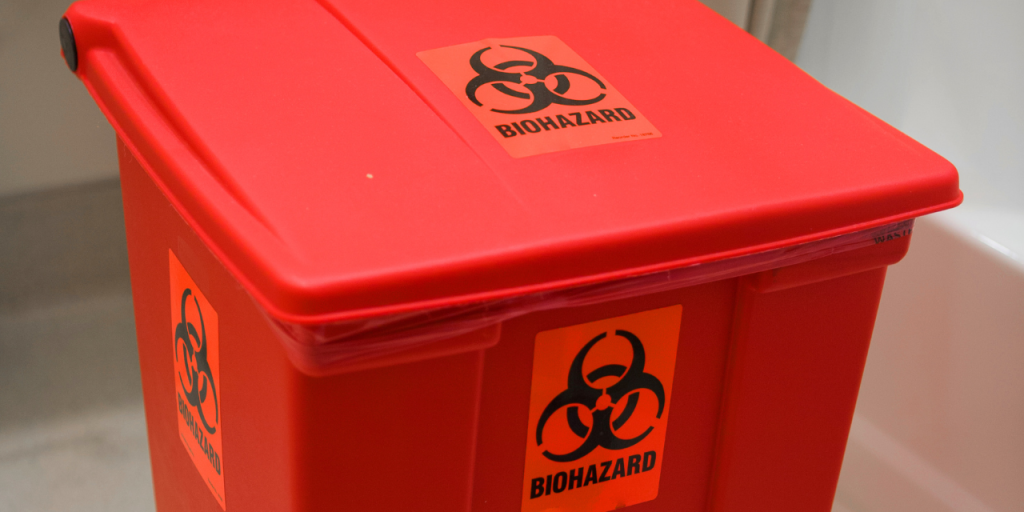
In Illinois, the Environmental Protection Agency (Illinois EPA) regulates medical waste disposal under strict guidelines. Acupuncture needles and sharps must be stored in sealed containers labeled with “BIOHAZARD,” “Sharps,” and the International Biohazard Symbol, and include your clinic’s contact information. Standards for containers may be found here. Containers must be stored securely and temperature-controlled if held more than 72 hours. Disposal manifests and treatment certificates must be kept on file for at least three years.
Although the federal Environmental Protection Agency defers most day-to-day sharps oversight to states, U.S. Department of Transportation (DOT) regulations still apply when waste is shipped off-site. Proper packaging and labeling are mandatory to stay compliant.
Step-by-Step: What To Do When the Container Is Full
- Seal it: Close the sharps container securely at or before the manufacturer’s fill line.
- Label it: Ensure the container is clearly marked with:
- “BIOHAZARD”
- “Sharps”
- The International Biohazard Symbol
- Generator name, address, and phone number
- Store it: Keep the sealed container in a locked, secure area that is inaccessible to the public and protected from weather and animals.
- Schedule pickup: Arrange collection with a permitted medical waste transporter that complies with Illinois EPA regulations.
- Keep records: Retain disposal manifests and certificates of treatment or destruction for a minimum of three years.
- Train staff: Review and update staff training on your Exposure Control Plan and ensure compliance with the disposal process.
- Replace promptly: Immediately replace full containers to avoid overfilling and maintain compliance.
Choosing a Reputable, Affordable Disposal Vendor
The first step is to conduct a focused local search. Look for terms like “medical waste disposal services Illinois,” “sharps container disposal Illinois,” or “regulated medical waste transporter Illinois.”
Be sure to:
- Confirm that the company holds a valid Illinois EPA permit to transport Potentially Infectious Medical Waste. Under state law, all transporters must be permitted unless a specific exemption applies.
- Verify that the company can handle sharps specifically, including the use of puncture-resistant containers and compliance with DOT shipping regulations.
- Require clear documentation: the vendor must provide a manifest and a certificate of treatment or destruction for every pickup.
Beyond credentials, compare pricing models and service packages. Some vendors charge additional fees for containers, pickups, or documentation. Ask for references from other small medical or chiropractic offices, and check online reviews for reliability.
For practices generating low volumes of sharps waste, mail-back programs may be a viable alternative—but you must ensure they meet Illinois EPA and DOT packaging and documentation requirements.
Bottom Line: Illinois chiropractic physicians must follow specific OSHA and Illinois EPA rules for handling sharps. Using a permitted disposal service, maintaining proper records, and training your staff are all essential steps in remaining compliant.